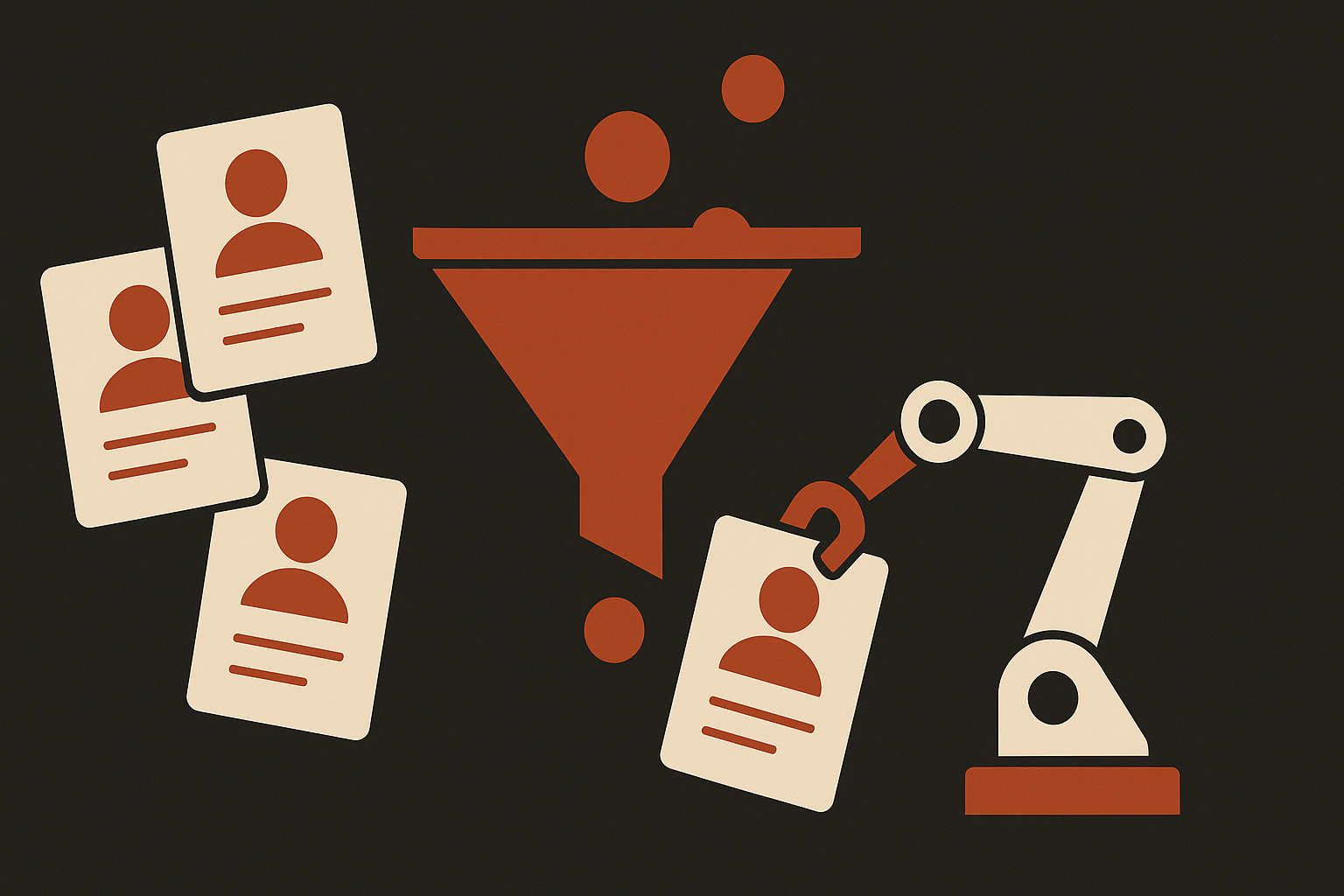
How Agentic AI Automates Lead Qualification
AI lead qualification uses software agents to score, enrich, and route every inbound lead the moment it arrives. No human triage required. The agent reads the form, checks the prospect against your ideal customer profile, pulls in missing data, and either books the meeting or hands sales a ranked, context-rich lead. All of it in seconds.
That speed is the whole game. Most teams still take hours to react, and the cost of the delay is brutal.
Why speed to lead decides who wins
A lead is hottest the instant it lands. Wait, and the interest cools fast.
The numbers are stark. Reaching out within the first minute can lift conversions by as much as 391%, and after five minutes the odds of qualifying that lead fall by around 80%, according to lead-response research compiled by Voiso. Call within five minutes and you are 21 times more effective than waiting thirty.
Now weigh that against reality: the industry still averages hours (sometimes days) before a first reply. No human team, however disciplined, answers every form fill at 2 a.m. in under sixty seconds. An agent does.
What an agentic qualification workflow actually does
"Agentic" means the system doesn't just score and stop. It takes the next action on its own. A typical workflow we build runs like this:
- Capture. A lead submits a form, replies to a campaign, or lands in your CRM. The agent picks it up instantly through a webhook.
- Enrich. It fills the gaps (company size, industry, tech stack, funding) from public and licensed data sources, so scoring runs on a full picture rather than five form fields.
- Score. The lead is graded against your ideal customer profile and intent signals, producing a clear ranking rather than a vague "hot/cold" label.
- Route or reply. High-fit leads get an instant, personalized reply or a booked meeting. Borderline leads enter a nurture track. Junk is filtered out before it ever reaches a rep.
- Log and learn. Every decision is written back to the CRM with reasoning, and outcomes feed the next round of scoring.
The difference from old-school lead scoring is that last mile. Traditional scoring produces a number and waits for a person. An agent acts on the number.
The results, in metrics that matter
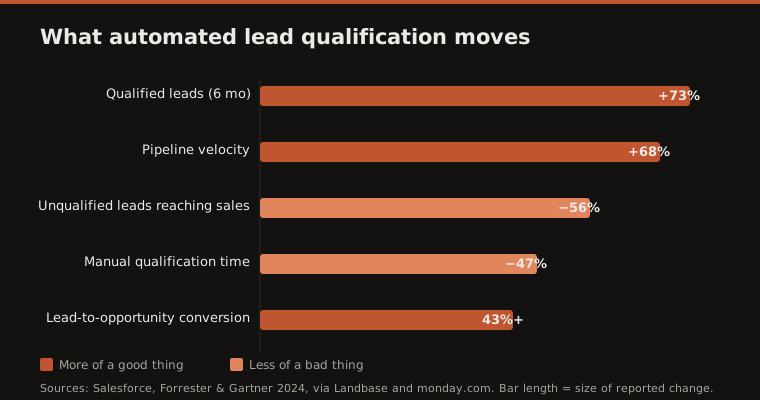
Automation earns its keep when the numbers move. Here is what teams adopting AI-driven qualification report:
| Metric | Reported impact | Source |
|---|---|---|
| Qualified leads (6 months) | +73% | Salesforce 2024, via Landbase |
| Manual qualification time | −47% | Forrester 2024, via Landbase |
| Unqualified leads reaching sales | −56% | Forrester 2024, via Landbase |
| Lead-to-opportunity conversion | 43%+ (top teams 60 to 70%) | Gartner 2024, via monday.com |
| Pipeline velocity | +68% | Salesforce 2024, via Apollo |
One figure is worth pausing on. When leads are properly qualified, conversion reaches about 40%, versus roughly 11% for unqualified prospects. Qualification is not admin. It is the difference between a pipeline that closes and one that leaks.
The teams that win aren't the ones with the most leads. They're the ones that answer the right lead first.

Where teams get it wrong
Automation done badly just makes bad decisions faster. Three traps we see repeatedly:
- Scoring on thin data. If the agent grades a lead on five form fields, it grades badly. Enrichment has to come before scoring, not after.
- No human handoff for the gray zone. Clear yes and clear no are easy. The middle needs a person, and the workflow must know when to escalate.
- Set-and-forget models. A scoring model that never sees outcomes drifts. The loop from closed-won back to scoring is what keeps it honest.
Avoid those, and the system compounds. Every week it sorts leads a little better than the last.
Getting started without ripping out your stack
You don't need a new CRM. Most of this runs on tools you already have (a form, a CRM, and an orchestration layer like n8n, Make, or a custom agent) wired together so the handoffs are instant. We usually start with one channel, prove the lift on real leads, then widen it.
If you want to see what that looks like on your own funnel, tell us how leads reach you today and we'll map the workflow. You can also browse the automation systems we build to see where qualification fits alongside CRM and reporting.
For most businesses, speed to lead is the cheapest conversion gain still sitting on the table.
Frequently asked questions
AI lead qualification is the use of software agents to score, enrich, and route inbound leads automatically: deciding which prospects match your ideal customer profile and are ready for sales, without a human triaging every form fill.
Within one minute if you can. Reaching out inside the first minute has been shown to lift conversions by up to 391%, and the odds of qualifying a lead drop roughly 80% after the first five minutes.
No. It removes the manual triage (data entry, scoring, and first-touch follow-up) so your team spends its hours on qualified conversations instead of sorting noise.
Most B2B teams report positive ROI within 12 to 18 months, per Boston Consulting Group's 2024 analysis, with conversion gains often visible in the first quarter.
Ready to automate the work?
Media Targeters builds custom agentic AI systems that run your operations while you focus on growth.
Book a discovery callRelated Articles
Why Agentic AI Projects Fail (5 Questions First)
Gartner expects over 40% of agentic AI projects canceled by 2027: not weak models, weak governance. Five questions predict which ones survive.
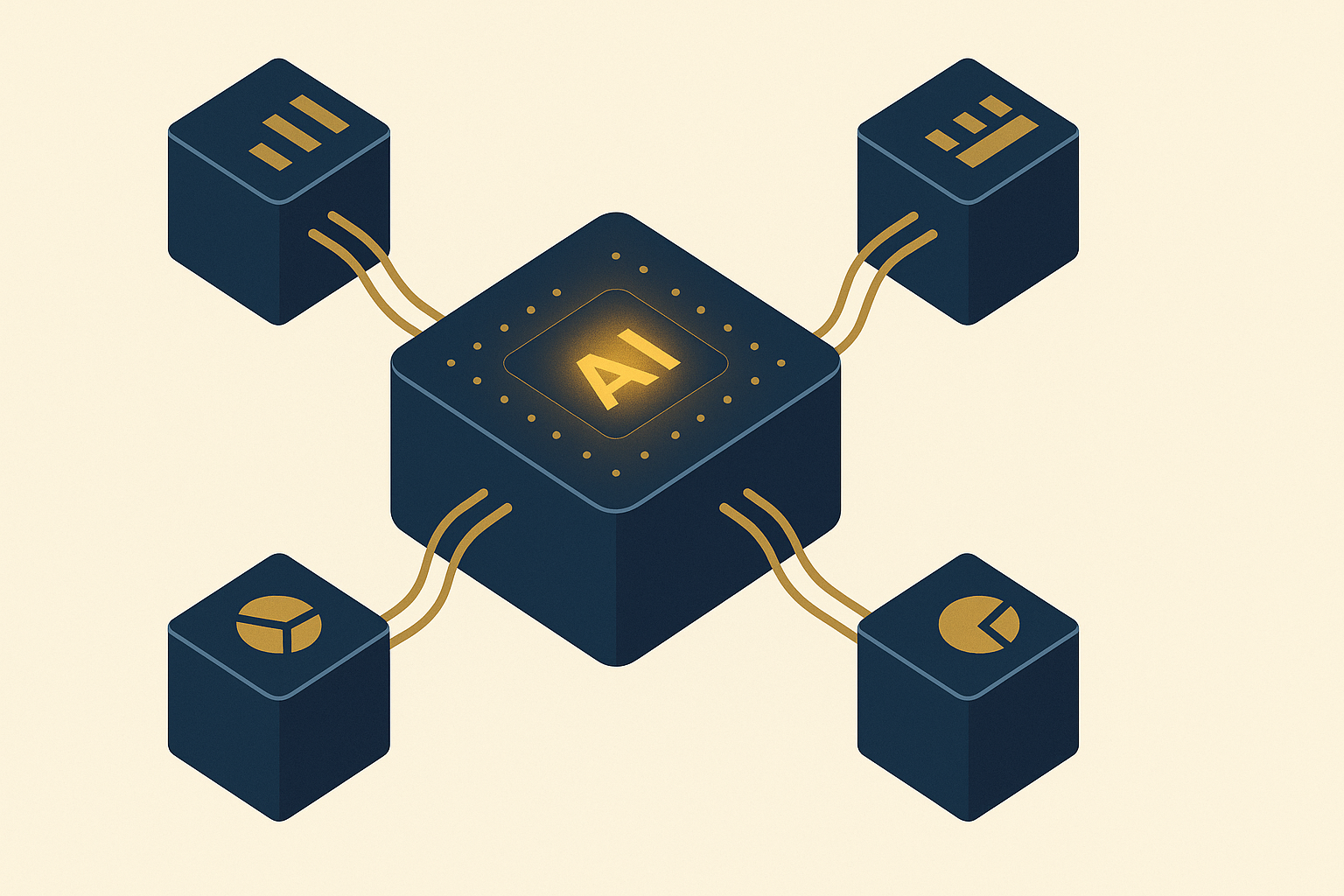
AI-Native SaaS Architecture: The 2026 Blueprint
The monolith is out. AI-native SaaS architecture in 2026 runs on real-time data, reliable backend AI, and MCP: the protocol that carries apps into ChatGPT.
AI Agents vs Agentic AI: What's the Difference?
AI agents handle single tasks; agentic AI orchestrates them toward goals. Get the real difference, a side-by-side table, and which one your business needs.

Morocco Real Estate 2026: Boom, Crash, or Neither?
Is Morocco's real estate market booming or crashing in 2026? Bank Al-Maghrib data shows a 40% Q1 transaction drop, but the yearly picture is milder.