Real-Time Data with Convex: A Beginner's Journey
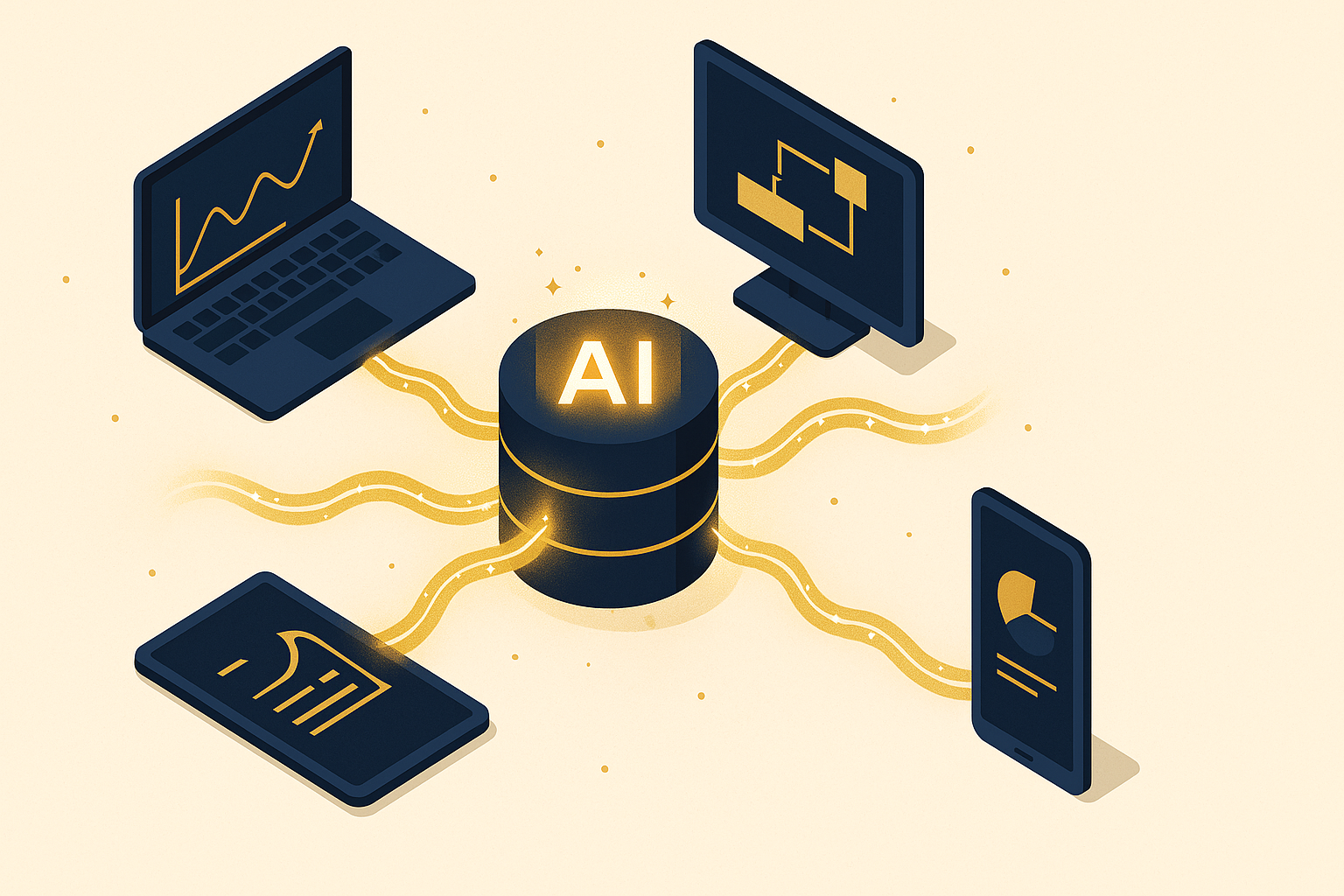
Convex is a reactive backend-as-a-service that keeps your data alive: when something changes, it pushes the update to every connected user in 20 to 50 milliseconds, with no manual WebSockets and no polling. This guide follows the full journey of real-time data with Convex, from frontend and backend basics through queries, security, and AI.
Introduction: the reactive web wakes up
Have you ever felt that absolute smoothness while using Notion or a chatbot? You type a letter, and it appears instantly on your colleague's screen on the other side of the world. To the user, it's pure magic. To the developer, it's the challenge of "real time."
Traditionally, the web ran on a slow, rigid "question-and-answer" model. Today we're moving to an architecture where data is alive. Here is how Convex reshapes that paradigm:
| Feature | Traditional backend | Reactive backend (Convex) |
|---|---|---|
| Speed | Request/response (visible latency) | Instant updates (20 to 50 ms) |
| Setup | Complex: WebSockets, manual pipes that break often | Simplified: automatic, robust stream |
| Updates | Manual (refresh or polling) | Automatic (pushed to the client) |
| Infrastructure | Several servers and an ORM to manage | All-in-one backend-as-a-service |
To master this magic, you first have to understand the territory your data travels through: the frontend and the backend.
The inseparable duo: frontend and backend
The web is a constant dialogue between the Client (the frontend, what you see) and the Server (the backend, the hidden brain).
Why is the client "public"? Everything that reaches the user's browser (HTML, CSS, JavaScript) is exposed by definition. That's why anything on the client side is vulnerable:
- Readable source code. Anyone can use "Inspect Element" to read your scripts.
- Transparent network. The "Network" tab in the developer tools shows every piece of data moving across the wire.
- Local execution. Because the code runs on the user's machine, it can be modified or hijacked.
Security focus: the key metaphor. API keys are like the keys to your house. Leave them on the doormat (hardcoded in your JavaScript) and any passer-by can walk in. Store these secrets on the server only. A stolen key can drain your bank account (paid AI) or wipe your database.
To secure this dialogue while keeping real-time smoothness, we bring in Convex.
Convex: the "living" database
Convex isn't just a place to store data; it's a backend-as-a-service that acts as your application's nervous system. It doesn't merely keep your data. It moves it around intelligently.
Its three superpowers:
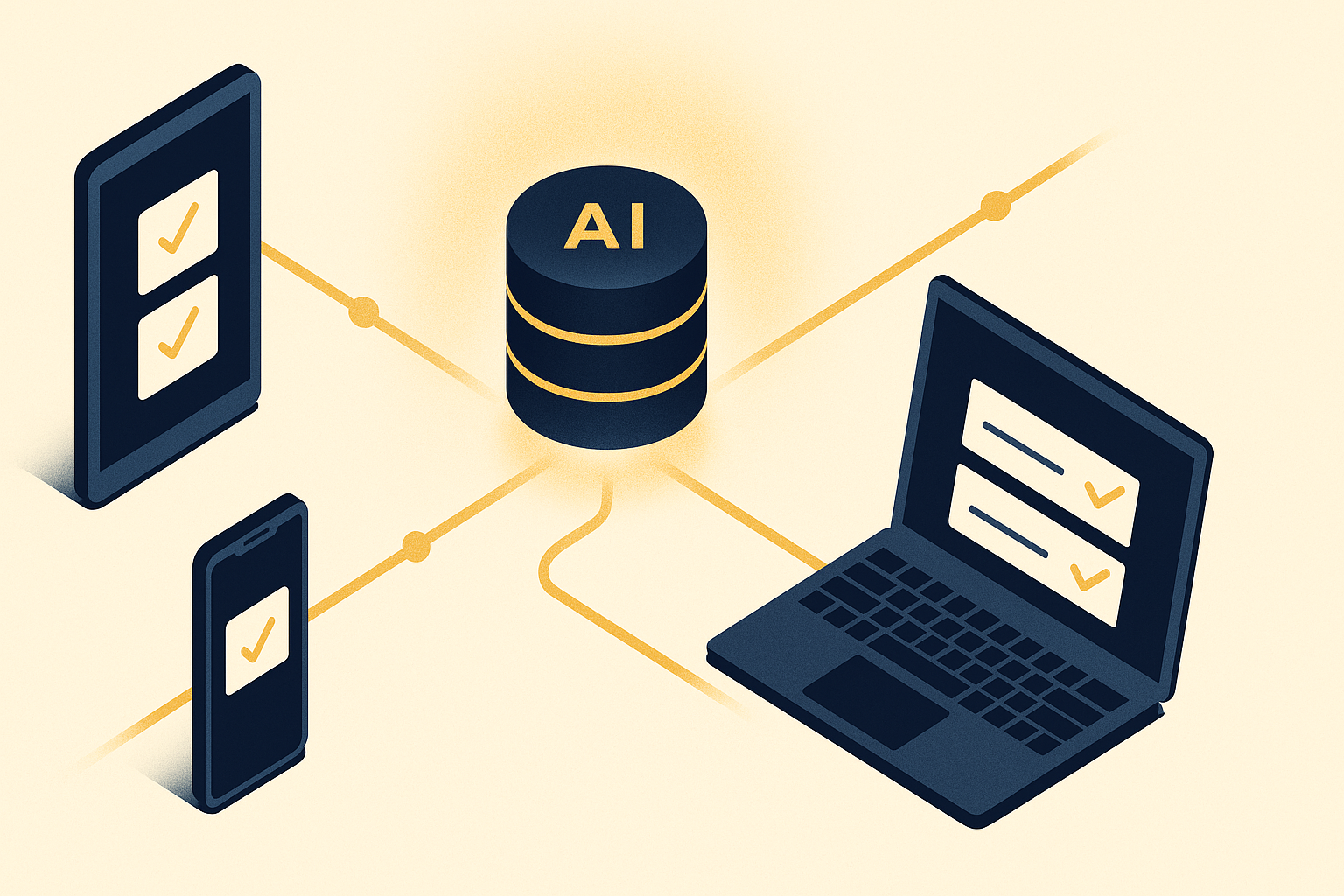
- Automatic synchronization. The moment a value changes, Convex pushes the update to every affected user, with no manual work.
- Native TypeScript. End-to-end type safety. Rename a field in the database and your code flags the error instantly.
- Zero manual WebSockets. No more building fragile plumbing for a chat feature; Convex handles the connection invisibly.
For Convex to know how to treat your data, though, it needs a precise map: the schema.
The schema and types: the project's foundations
The schema.ts file defines the structure of your data universe. It uses validators to make sure only clean data enters your system. See the Convex schema docs for the full reference.
v.string()/v.boolean()guarantee that text stays text and that a true/false option never turns into a number by accident.v.id("table")is the guardian of relational integrity. This validator doesn't just check that the value is a string. It makes sure it points to a record that really exists in the specified table.- Preventive filtering. These validators stop corrupted data at the server door, before it ever reaches your logic functions.
With a solid structure in place, we can bring the data to life through queries and mutations.
The data cycle: queries and mutations
This is where the journey turns spectacular. Picture your application not as a stack of static pages, but as a living organism.
Queries: your live telescope. Using useQuery is like pointing a magic telescope at your database. Instead of taking a fixed photo, the telescope stays open: if a star moves (if a value changes) you see it immediately through the eyepiece, without doing anything.
Mutations: the hand that moves the stars. A mutation (insert, patch) is the hand that acts on reality. It's the only way to change the state of the universe, and every gesture is transactional: it all happens at once, or nothing happens at all.
Did you know? Every mutation in Convex is atomic. Think of transferring money: either the withdrawal and the deposit both succeed, or nothing happens. There's no broken "in-between" state.
So who is allowed to operate this telescope? That's the job of identity.
Security and identity: protecting the user
For the experience to stay magical, security has to be invisible. By plugging in a tool like Clerk, we wrap each user in a protective bubble.
The secret of HTTP-only cookies: to avoid making the user log in on every click (smooth UX), we use 7-day sessions. Security rests on HTTP-only cookies: "invisible guards" that carry the user's identity badge (the JWT). Unlike ordinary cookies, they can't be reached by JavaScript. So even if a malicious script runs on your page, it can't steal the user's identity.
With a database that is both reactive and secure, we're ready for the final step: artificial intelligence.
What comes next: toward intelligent apps (AI & MCP)
The data's journey no longer stops at the user's screen. It now feeds AI through the Model Context Protocol (MCP), the same standard behind the agent systems we cover in AI agents vs agentic AI.
MCP lets a chatbot step out of its text bubble and act on the real world:
- Tools. The AI can now take action, for example calling a function to book a hotel.
- Resources. The AI can see your structured data and render interactive widgets (maps, charts) right inside the conversation.
- Standardization. One MCP implementation lets your app talk to ChatGPT, Claude, or any future AI model.
Conclusion: your new superpower
You've just walked the full cycle of modern data. Master Convex and you stop building plain websites: you build living, intelligent experiences.
The distinction is the whole point: a reactive backend turns "fetch and forget" into "connect and stay in sync." If you're building something that needs data to feel alive (a chat, a dashboard, a collaborative tool) tell us what you're building and we'll help you scope it. You can also see the AI systems we build for clients.
"As a child, I spent hours reshaping the world with LEGO. Later I found dev, LEGO where the bricks are replaced by lines of code." Thibaud d'Arros
The world is now your playground. Go build.
Frequently asked questions
Because useQuery keeps a live connection open. Instead of fetching a fixed snapshot, it re-runs and refreshes your UI automatically the moment the underlying data changes.
The Network or Console tab in the browser's developer tools (DevTools), which exposes the scripts and the data a page sends and receives.
It enforces relational integrity. It checks not only that the value is text, but that it points to a record that actually exists in the named table.
The cookie carries the user's identity token (a JWT) but is unreadable by JavaScript, so even a malicious script running on the page cannot steal the session.
Ready to automate the work?
Media Targeters builds custom agentic AI systems that run your operations while you focus on growth.
Book a discovery callRelated Articles

Frontend vs Backend: Why Your Code Isn't a Vault
Frontend vs backend, explained through security: why the browser can't keep a secret, how a backend proxy protects your API keys, and a survival checklist.

Morocco Real Estate 2026: Boom, Crash, or Neither?
Is Morocco's real estate market booming or crashing in 2026? Bank Al-Maghrib data shows a 40% Q1 transaction drop, but the yearly picture is milder.

SEO vs GEO vs AEO vs AIO: What Works in 2026
SEO, GEO, AEO, AIO: four acronyms, one job. What Google's own 2026 docs confirm, what the research proves, and which AI-search tactics are just hype.

Why Agentic AI Projects Fail (5 Questions First)
Gartner expects over 40% of agentic AI projects canceled by 2027: not weak models, weak governance. Five questions predict which ones survive.